Hit enter to search or ESC to close
3 November 2026
Most metal meshes have a favourite enemy. Stainless fails in chlorides, galvanised in humidity, copper in acids. Monel sits apart because it does not pick one fight to lose — it shrugs off seawater, acidic brine and hot gas. That is why monel wire mesh shows up wherever ordinary steel has already rusted once.
This article is for buyers who are tired of replacing screens every season. It covers when monel wire mesh is worth the premium, which grade to ask for, how the weave changes performance, and how to keep from paying stainless prices for plated fakes. No fluff — just the decisions that decide whether your screen outlives the machine it is fitted to.

Put a monel wire mesh anywhere there is salt, chloride, or dilute acid and it outlasts stainless by years. The alloy is roughly 67% nickel and 30% copper, which gives it an unusual strength: it stays tough in deaerated acids and in chloride-rich water where 304 and even 316 pit quickly. You find it in seawater intake screens, pump guards, electrolytic filters, and pickling lines.
The practical trigger is simple. If your current screen fails with pitting or crevice corrosion — little rust spots under the weave — the answer is usually not a thicker version of the same metal. It is a change of alloy to monel wire mesh. Switching costs more up front and less over two years, because you stop paying for labour and downtime every few months.
The grade most people want is Monel 400. monel 400 wire mesh resists seawater, hydrofluoric acid, and caustic alkalis, and it keeps its strength from cryogenic temperatures up to around 500°C. Hardness is rarely the point in a screen — corrosion resistance and edge strength are.
Do not pick a grade from a name. The honest way to choose between monel 400 wire mesh and a stainless mesh is to read the corrosion rate data for your actual medium and temperature. A supplier who hands you a chart instead of a slogan will not argue with you after the first failure.
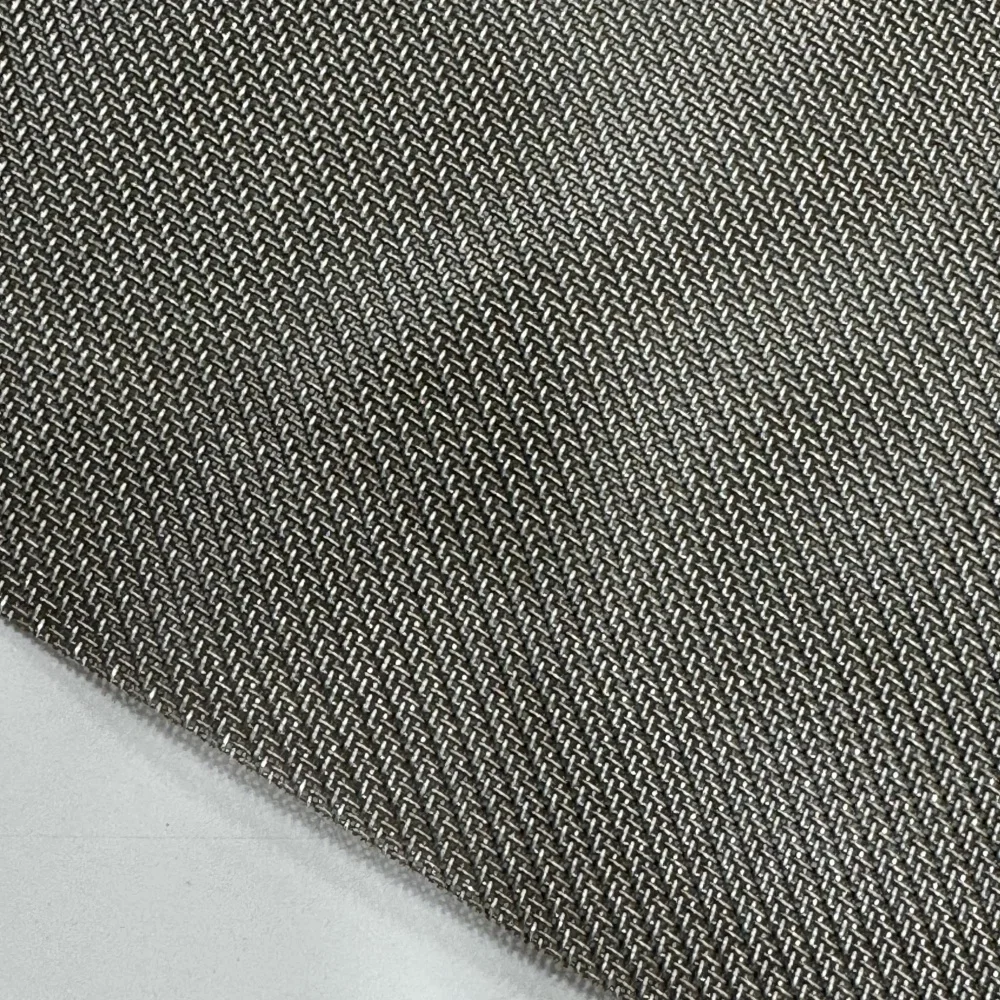
Once the alloy is settled, the weave decides how the screen behaves. Plain monel mesh is flat and uniform, right for sifting, straining and light filtration. Twill monel mesh packs the wires tighter and gives a smoother surface, which suits fine particle work and higher pressure. Mesh counts range from a coarse 2×2 to a fine 400×400.
Open area matters just as much. A weave too dense throttles flow and builds pressure; one too open lets the contaminant straight through. Work from the particle size and flow you actually need, then match the monel mesh to those two numbers.
A monel screen is more than a corrosion-resistant steel screen — it is a part you can stop thinking about. In media that would eat a carbon-steel screen in a month, a monel screen holds its mesh count, keeps its edges, and does not shed wire into the product stream. That matters in food, chemical and pharmaceutical lines where a stray filament ruins a batch.
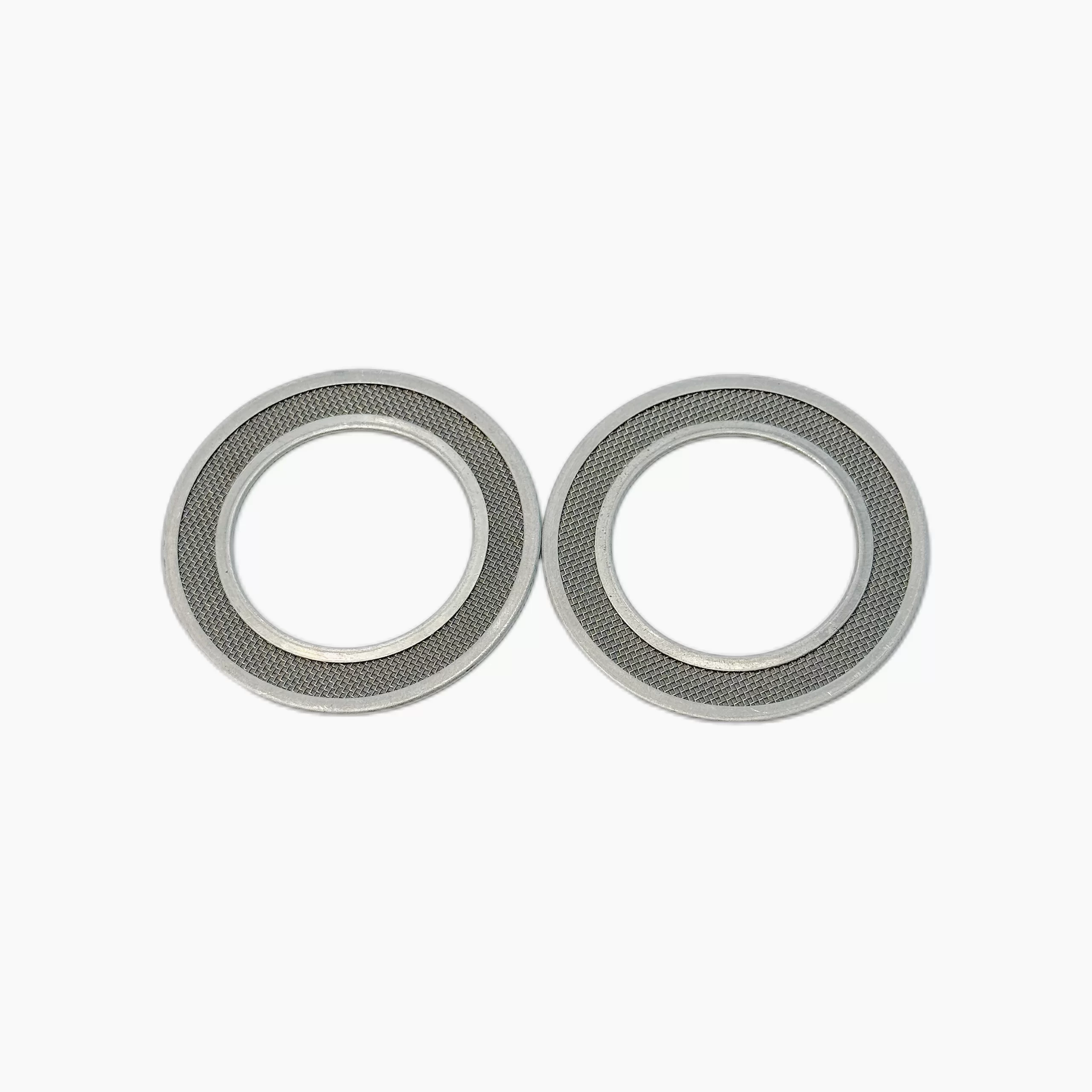
The other quiet advantage is edge behaviour. monel screens can be crimped, welded or reinforced around the rim, so they hold shape through repeated cleaning and backflushing. A screen you can clean and reuse ten times is where the premium pays for itself.
If your application lives in seawater, acidic process water, or hot flue gas, monel screen mesh is the specification to write down. Offshore water intakes, desalination pre-filters, scrubber internals and catalyst screens all run on it because the medium will not wait for stainless to fail. Choose the micron or mesh count to match your duty, and specify the edge finish.
Keep the number simple on the order: alloy, mesh count, wire diameter, and overall size. A screen that is right on alloy but sloppy on mesh count will still let the wrong particle through. Get all four right and the monel screen mesh becomes the part you fit once and forget.
The monel wire mesh market has a well-known counterfeit: nickel-plated steel sold as Monel 400. It looks identical on a shelf and fails within months in the same media that genuine Monel shrugs off. The cheap version is cheap for a reason and undermines every guarantee the project depends on.
Ask the supplier for a mill certificate that states the actual nickel and copper content, and, if possible, a sample you can test. Genuine monel wire mesh is heavy for its size, non-magnetic in annealed condition, and tarnishes to a warm grey. A factory that offers a mill cert and cut-to-size service is worth more than the lowest quote.
Q1:What is the difference between monel wire mesh and stainless steel wire mesh?
Monel is a nickel-copper alloy (roughly 67% nickel, 30% copper), while stainless steel is an iron-chromium alloy. The practical difference is corrosion behaviour: monel wire mesh resists chloride, seawater and deaerated acid far better than 304 or 316 stainless. Stainless is cheaper and stiffer; monel lasts longer in the worst media.
Q2:Is Monel 400 magnetic?
In the annealed condition, Monel 400 is essentially non-magnetic — a quick way to separate it from nickel-plated steel fakes. It can show slight magnetism after heavy cold working, but an annealed monel wire mesh should not hold a magnet the way a plated steel screen will.
Q3:How long does monel wire mesh last in seawater?
In clean, flowing seawater, monel wire mesh typically outlasts stainless by a wide margin — often years before any meaningful attack, versus pitting in months on 316. Real life depends on velocity, temperature and biofouling, but monel is the reference material for marine screens.
Q4:Can you supply monel wire mesh cut to size?
Yes. We cut and edge-finish monel wire mesh and monel screen mesh to your exact dimensions, whether you need a single prototype or a production batch. Specify alloy, mesh count, wire diameter and overall size, and we will cut, weld or reinforce the edge before shipping.
Q5:What mesh count should I choose for my filter?
Match it to the particle you need to stop and the flow you need to keep. Coarse counts (2×2 to 20×20) suit strainers and guards; medium counts handle general sifting; fine counts (100×100 and above) work for precise filtration but restrict flow, so balance mesh count against pressure drop in your line.
That is the standard we build on at Hebei Xiangguang Metal Net Co., Ltd. Established in 1989 and based in Anping, Hebei — the historic heart of China's wire-mesh industry — we have woven and finished monel wire mesh, monel mesh and monel screen mesh for more than three decades. We supply monel 400 wire mesh cut to your dimensions, edge-finished and batch-checked before shipping, with mill certificates on request. If you are sourcing corrosion-resistant mesh for a new build or a failing line, send us your alloy, mesh count and size today for a competitive quote. With our history, capacity and quality control behind it, you are ordering from a supplier that has done this for a living since 1989.